


04
2026
-
03
Key Applications of Aluminium Circles in Cookware Production
Author:
Aluminium stands out in cookware production thanks to its outstanding thermal conductivity, strong durability, and lightweight structure. Among all aluminium materials, aluminium circles are the top choice for manufacturing high-quality cookware. Their flat, round shape enables easy forming and delivers stable, reliable performance across a wide range of cooking scenarios.
Why Aluminium Circles Are Ideal for Cookware?
Although aluminium circles are widely praised for thermal performance and cost efficiency, their real advantage lies in excellent manufacturing versatility.
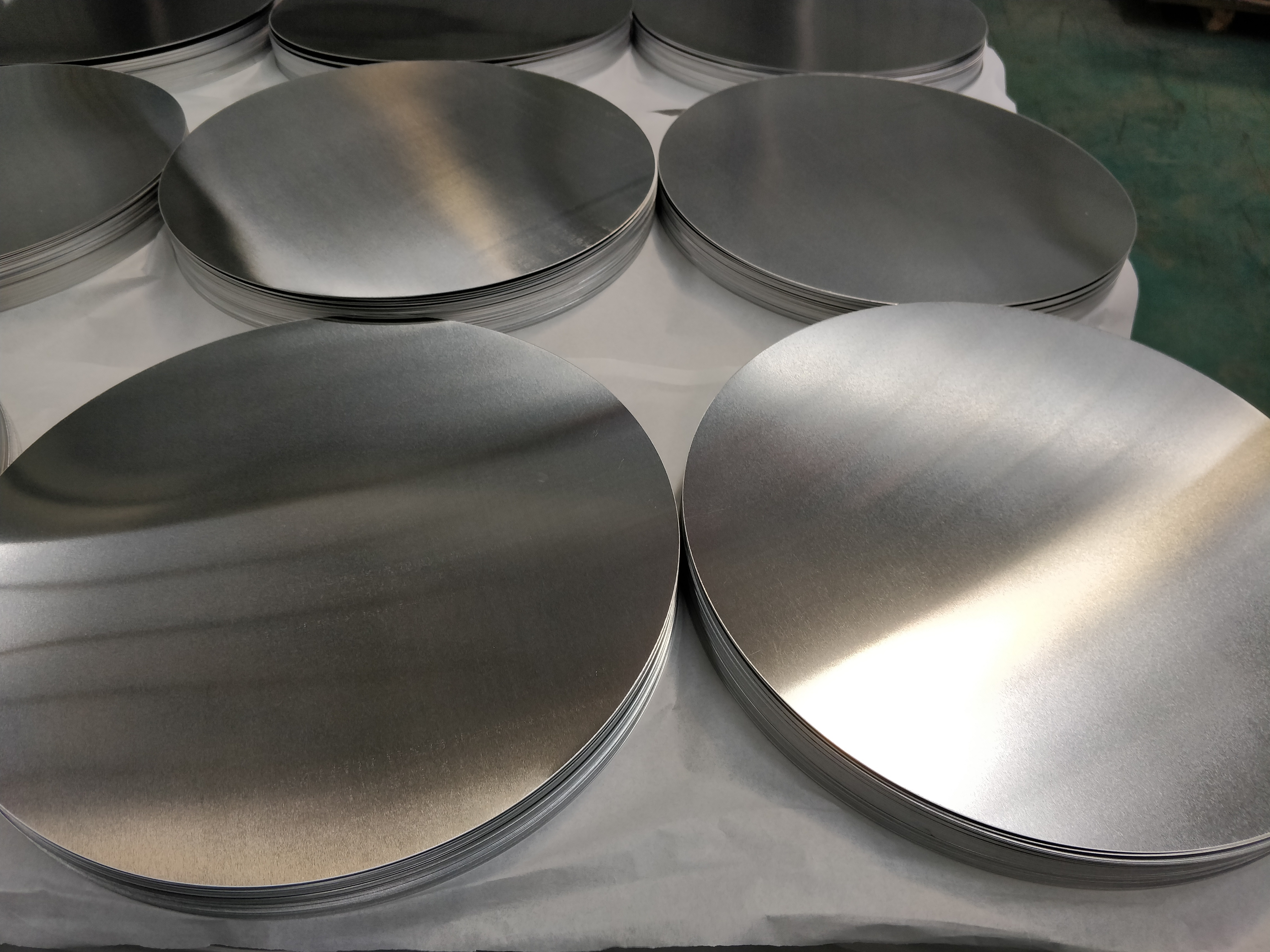
Aluminium circles are uniform, flat blanks with high ductility, making them an ideal base for production and design. Their consistent structure ensures high precision during automated processes such as spinning, deep drawing, and anodizing — key steps in modern cookware manufacturing.
Moreover, aluminium circles achieve an outstanding balance between strength and flexibility. This allows manufacturers to develop new designs, coatings, and composite technologies without compromising safety or structural integrity. As kitchens move toward efficiency and sustainability, aluminium cookware adapts easily — whether combined with steel for induction compatibility or used for thermal insulation.
In short, aluminium circles are more than just a raw material; they drive innovation in cookware production, enabling smarter design, faster manufacturing, and future-ready solutions for the evolving cooking industry.


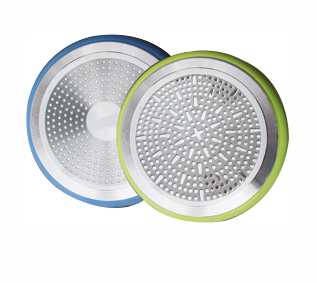

Major Applications of Aluminium Circles in Cookware
1.Non‑Stick Cookware
In addition to excellent thermal properties, aluminium circles provide an ideal surface for bonding non‑stick coatings. They are among the few metals that ensure strong, uniform adhesion for PTFE or ceramic layers. The ultra‑smooth surface improves food release and extends product life.
Burr‑free edges and flat surfaces also simplify coating application, reduce material waste, and lower quality defects — a critical benefit for high‑volume production.
2.Pressure Cooker Bodies
Aluminium circles are widely used for pressure cooker bodies not only for their strength but also for stable deformation resistance. Aluminium’s predictable mechanical behavior under pressure makes it perfect for high‑safety pressure vessels.
Alloys with magnesium or manganese boost tensile strength while retaining ductility. The final product can withstand repeated heating cycles and pressure surges while remaining lightweight and easy to handle.
3.Cookware Lids
While often overlooked, cookware lids rely heavily on high‑quality materials. A good lid requires proper weight, rigidity, and thermal efficiency — all provided by aluminium circles.
They can be stamped with tight tolerances to create a secure seal that locks in heat and moisture. Their light weight reduces hand fatigue during frequent use. Manufacturers can also laser‑cut or emboss logos and steam vents directly onto the lid.
4.Stockpots & Cooking Pots
Commercial kitchens and large households value aluminium stockpots for their fast, even heat response. Beyond thermal performance, the key advantage is production scalability.
Aluminium circles can be formed into pots of various sizes with minimal tool changes, saving time and cost. Their excellent formability allows reinforced bases and rolled edges — essential features for heavy‑duty, daily‑use cookware.
5.Induction Cookware Base Plates
Although pure aluminium is not magnetic enough for induction cooktops, it performs extremely well in composite induction cookware when bonded with magnetic stainless steel.
Aluminium discs act as core layers or bottom plates, ensuring stable bonding without warping. This structure enables fast, even heating on both traditional and induction stoves.
Advantages of Aluminium Circles Over Other Materials
Cookware production depends on material performance, efficiency, weight, and cost. Aluminium circles outperform many traditional metals by being lighter, more affordable, and more adaptable.
Aluminium heats quickly and evenly, saving energy and reducing cooking time — unlike stainless steel, which heats slowly. Unlike copper, which needs frequent polishing, aluminium naturally forms a protective oxide layer for long‑term durability.
Aluminium’s softness and ductility enable deep drawing, spinning, and complex shaping without cracking, giving designers greater creative freedom. In addition, aluminium is 100% recyclable, supporting eco‑friendly production and sustainable development in the cookware industry.
Conclusion
Aluminium circles are much more than basic raw material — they enable smarter, faster, and more versatile cookware design. From energy‑saving non‑stick pans to induction‑ready hybrid cookware, aluminium circle technology continues to drive progress.
Their real value lies in precision, design freedom, production efficiency, and sustainability. As kitchen trends evolve, aluminium circles remain at the heart of modern, high‑performance cookware.
Aluminum Circle ,Aluminum Disc,Applications of Aluminium Circles in Cookware

2025-03-17

We will continueto provide high quality products and better after-sales service forour customers, and welcome to visit our company and establishlong time business relationship.
Tel: +86 18883135969
E-mail: 1511572034@qq.com
Address: 6-23, Building 2, No. 21, Xishuang Avenue, Shapingba District, Chongqing


